![[Original size] Capital Stacker (10).png](https://static.wixstatic.com/media/b8f0a7_49ab1c2f900a4bb5b04f885adbc88459~mv2.png/v1/fill/w_120,h_120,al_c,q_85,usm_0.66_1.00_0.01,enc_avif,quality_auto/%5BOriginal%20size%5D%20Capital%20Stacker%20(10).png)

The Chili Sauce vs. Ketchup Problem: Why America Still Isn’t Building Missing-Middle Housing in 2026
If you’ve followed my work for any length of time, you’ve heard me talk about the “ketchup vs. chili sauce” problem in American housing.
It’s simple:
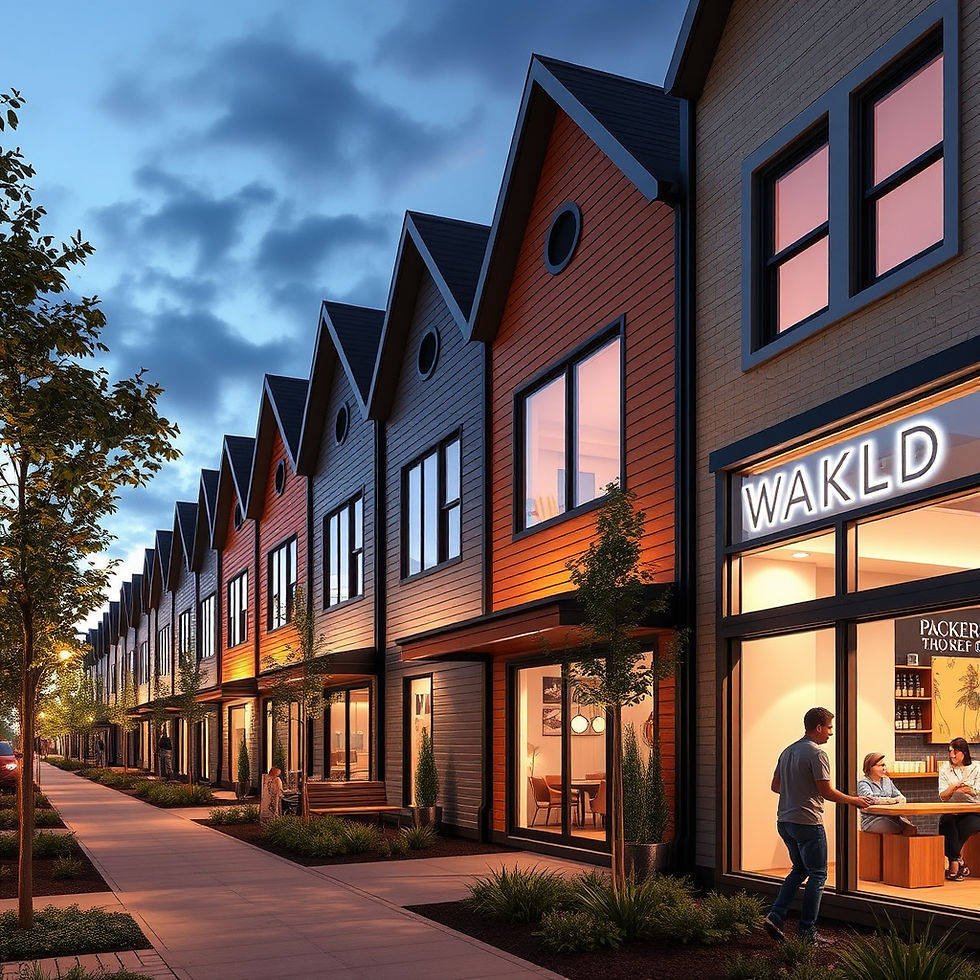
Builders know how to make ketchup (single-family homes and large apartment buildings). But communities desperately need chili sauce (duplexes, triplexes, quads, ADUs, bungalow courts, stacked flats, cottage homes - the missing-middle).
And in 2026, even with a calmer national market, we’re still not producing the housing types that fill the gap between renting an apartment and owning a $350,000 house.
Zillow’s latest forecasting doesn’t talk about this part. But communities feel it every day.
Let’s break down why the missing-middle remains missing and what we can do about it.
1. Builders Build What They Know, Not What We Need
If you ask a builder to deliver a conventional single-family home, they already have:
the blueprint
the subs
the workflow
the cost model
the appraisal history
the lender relationships
It’s predictable. It’s repeatable. It’s bankable.
That’s ketchup.
Now ask the same builder to design a triplex or bungalow court in a modest-income community where the comps don’t exist. Suddenly nothing is predictable.
That’s chili sauce.
And guess what? Builders aren’t in the business of experimentation. Margins are too thin. Risk tolerance is too low.
So they stick to ketchup - and America continues to undersupply the housing types that working families actually need.
2. The Appraisal System Doesn’t Reward Innovation
In most markets, the valuation system is based on comparison, not replacement cost.
If there are no comparable missing-middle projects within a mile radius…
…the math breaks down. The loan-to-value breaks down. The capital stack breaks down. And the developer walks away.
This isn’t a builder problem. It’s a systems problem.
Communities that want chili sauce must create:
predictable cost books
pattern books
pre-approved designs
developer toolkits
capital supplements that plug the appraisal gap
The H.O.M.E. Method does exactly this, which is why it works in places traditional development won’t go.
3. Local Regulations Still Favor Ketchup
Even in 2026, many zoning codes still:
ban duplexes in single-family neighborhoods
prohibit ADUs
require excessive parking
force large lots
mandate wide setbacks
impose density caps
restrict workforce-friendly materials
These rules weren’t created to block missing-middle housing…but that’s exactly what they do.
Communities often say, “Builders won’t build missing-middle housing.”
But in most places the real truth is:
Builders can’t build missing-middle housing...even if they want to.
Not without local leadership removing barriers.
4. Builders Don’t Want to Go First
There’s a cost to being the first mover:
you fight the zoning
neighbors push back
the bank is nervous
the valuation is uncertain
the absorption is unknown
This is the most expensive version of the project.
Being second or third is much easier. You’re no longer proving the concept - you’re replicating it.
That’s why communities need a developer’s developer - someone who is willing to go first, create the comps, de-risk the product, and make it easier for local builders to follow.
This is one of the core roles of Mission BUILD.
5. No Buyer Pipeline = No Confidence
Even if you fix zoning and de-risk the project, builders still won’t step in if they don’t believe buyers are ready.
Missing-middle housing thrives when:
renters know their path to homeownership
DPA tools are visible and accessible
lenders understand nontraditional formats
Realtors are trained to sell these products
the buyer pool is activated early
This is why Club 720 exists. Demand activation is not a marketing function — it’s a housing production function.
Without a buyer pipeline, innovation dies.
So Why Isn’t Missing-Middle Housing Being Built in 2026?
Because the system still rewards ketchup.
Because builders aren’t trained to make chili sauce. Banks don’t know how to value chili sauce. Zoning won’t allow chili sauce. And communities haven’t built the demand systems that make chili sauce profitable.
But here’s the hopeful part:
Missing-middle housing isn’t missing because it’s impossible. It’s missing because the system hasn’t been built to support it.
And systems can be built.
The Fix: Become a Missing-Middle Market Maker
If you want chili sauce, you don’t wait for a factory in another state to invent it. You build the local capacity to make it yourself.
Communities that want missing-middle housing must:
✔️ Train local builders
Use pattern books, cost books, builder academies, and site plans that simplify execution.
✔️ Fix zoning
Enable duplexes, triplexes, stacked flats, cottage courts, and ADUs by right.
✔️ Activate your buyer pool
Bring renters, employers, and first-time buyers into a structured pipeline.
✔️ Close the appraisal gap
Use local capital, public tools, and creative financing.
✔️ Bring in a developer who can go first
Create comps. Prove absorption. Reduce risk.
✔️ Build a production system
Not a plan. Not a report. A system.
This is exactly what we do with:
Mission BUILD → supply-side structure
Club 720 → demand activation
Hubs → local coordination
The H.O.M.E. Method → systems transformation
Missing-middle housing becomes possible when the community becomes the producer — not the observer.
2026 Doesn’t Have to Look Like 2025
If your community is tired of talking about the housing problem and ready to build solutions, missing-middle housing is your lowest-cost, highest-impact strategy.
But it won’t produce itself.
You must build the system that makes chili sauce possible.
And we are here to help.


This metaphor just works — and it lands because it names the real culprit: not bad actors, but a system that only knows how to reward what’s familiar.
What especially hits is your point that builders aren’t refusing missing-middle housing — they’re structurally prevented from attempting it. When appraisal logic, zoning, and capital all punish first movers, “innovation” becomes a liability, not a virtue.
I also keep coming back to how closely this tracks with workforce reality in small and mid-sized communities. People aren’t failing to advance — the rung between renting and a $350K house simply doesn’t exist anymore. Housing production and lived economics have drifted apart.
Your call to treat communities as producers and market makers — not passive…