![[Original size] Capital Stacker (10).png](https://static.wixstatic.com/media/b8f0a7_49ab1c2f900a4bb5b04f885adbc88459~mv2.png/v1/fill/w_120,h_120,al_c,q_85,usm_0.66_1.00_0.01,enc_avif,quality_auto/%5BOriginal%20size%5D%20Capital%20Stacker%20(10).png)

Why Housing Policy Isn’t the Problem — and Why Analyze + Improve Matter More Than Ever

Over the past year, the National Association of Home Builders (NAHB) has been clear about what’s holding housing production back: restrictive local regulations, rising costs, labor shortages, limited buildable lots, and risk-averse lending environments.
They’re right.
But there’s a nuance that often gets lost in the national conversation - and it’s one we’ve only fully understood by working inside real communities across Indiana and the Midwest.
Policy change alone does not produce housing. Systems do.
That insight is why the H.O.M.E. Method places such a strong emphasis on the Analyze and Improve phases - and why Mission BUILD is becoming an essential part of the housing delivery equation.
When “By Right” Still Means “Never Built”
Take Valparaiso, Indiana - a forward-thinking community by any measure.
Since 2009, Valparaiso has allowed Accessory Dwelling Units (ADUs) by right. No special approvals. No variances. No political drama. From a policy standpoint, the barrier was removed more than a decade ago.
And yet…
Not a single ADU has been built.
When we ask local builders why, the answer is consistent:
“There’s no demand.”
But this is where the Analyze phase forces a deeper question:
How can there be demand for a product that buyers have never seen, toured, priced, or been qualified for?
This is not a zoning failure. It’s a market introduction failure.
Demand Doesn’t Appear — It’s Activated
In traditional housing models, builders are expected to speculate on demand. They design, price, and build first - then hope buyers show up.
That approach breaks down completely when introducing:
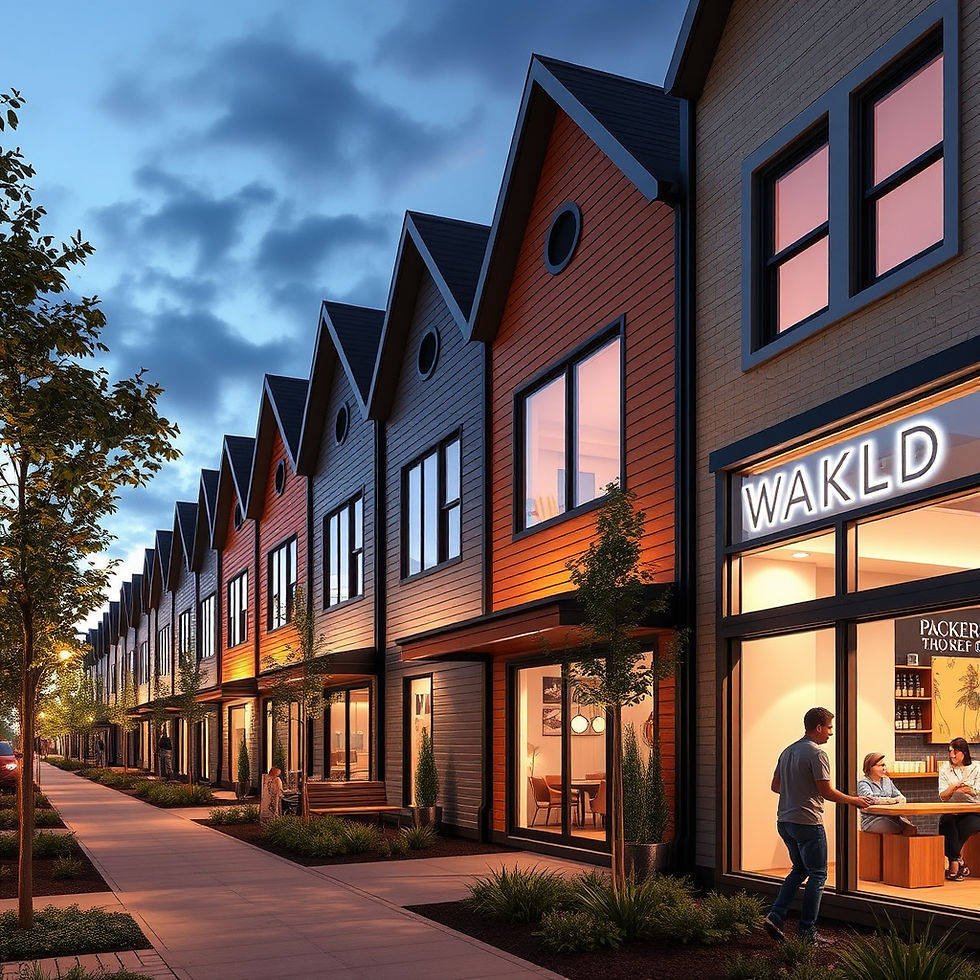
Missing-middle housing
ADUs
Cottage courts
Small-lot and attached products
Today’s buyers - especially first-time buyers, downsizers, and workforce households - need:
Education
Visuals
Financing clarity
Confidence
This is why the Capital Stacker Accelerator emphasizes a sales-buyer matching system that runs ahead of construction.
If buyers don’t know:
What an ADU can look like
How beautiful and efficient it can be
How it can be financed
How affordable it actually is
Then “no demand” becomes a self-fulfilling prophecy.
When Good Intentions Still Produce Bad Outcomes
We see a related issue in areas where local governments have taken a proactive step by creating pre-approved home designs that builders are allowed to use.
On paper, this is exactly the kind of reform NAHB advocates for.
But local housing nonprofits have told us something troubling:
They are paying significantly more than market rate for homes built with these designs — even when serving below-market buyers.
This tells us something critical.
The issue isn’t design approval. It’s builder capacity, pricing discipline, and delivery systems.
Without:
Standardized specs
Repeatable pricing
Aligned sales pipelines
Builder enablement
Even well-intentioned programs can inadvertently increase costs instead of lowering them.
Why Analyze + Improve Are the Hardest — and Most Important — Steps
Most communities are very good at the Define and Measure phases:
Housing studies
Market analyses
Land inventories
They are often very willing to Connect:
Convene stakeholders
Form committees
Pursue funding
Where systems break down is in Analyze and Improve:
Why aren’t builders saying yes?
Why aren’t prices coming down?
Why aren’t new product types being delivered?
Why doesn’t “by right” translate into built units?
These questions require uncomfortable honesty...and new tools.
The Role of Mission BUILD
This is exactly the gap Mission BUILD was created to fill.
Mission BUILD operates as a developer’s developer - helping communities and builders:
Price risk realistically
Standardize product types
Reduce soft costs
Access sustainable financing tools for product that's new to the market
Move from one-off projects to repeatable models
The Builder Transformation Academy, launching in Northeast Indiana, builds on this by:
Creating a network of builders to deliver missing-middle housing
Introducing standardized designs and specs
Aligning builder partners with pre-qualified buyers through Club 720
Reducing guesswork and speculative risk
This is not about teaching builders how to build. It’s about helping them build different things - profitably, repeatedly, and with confidence.
The Real Lesson from NAHB — and From the Field
NAHB is right about the barriers.
But what our work continues to show is this:
Housing doesn’t get built because policy allows it. It gets built when systems make it inevitable.
Forward thinking communities that allow ADUs and/or offer pre-approved designs don't fail because they improved local policy.
In these cases, what’s missing is a coordinated delivery system that aligns:
Builders
Buyers
Capital
Product
That is the work of Analyze + Improve - and it’s where the next generation of housing solutions will live.
Looking Ahead
As we continue deploying the HOME Method across Indiana and beyond, our focus remains simple:
Bridge the distance between market potential and market productivity - one system at a time.
If you’re a community that has “done all the right things” on paper but still isn’t seeing housing built, the answer may not be another policy change.
It may be time to build the system.


Comments